Searching for birds is often a “race against the heat of the day,” says White; it gets hotter and hotter — sometimes reaching 100 degrees before 9 a.m.
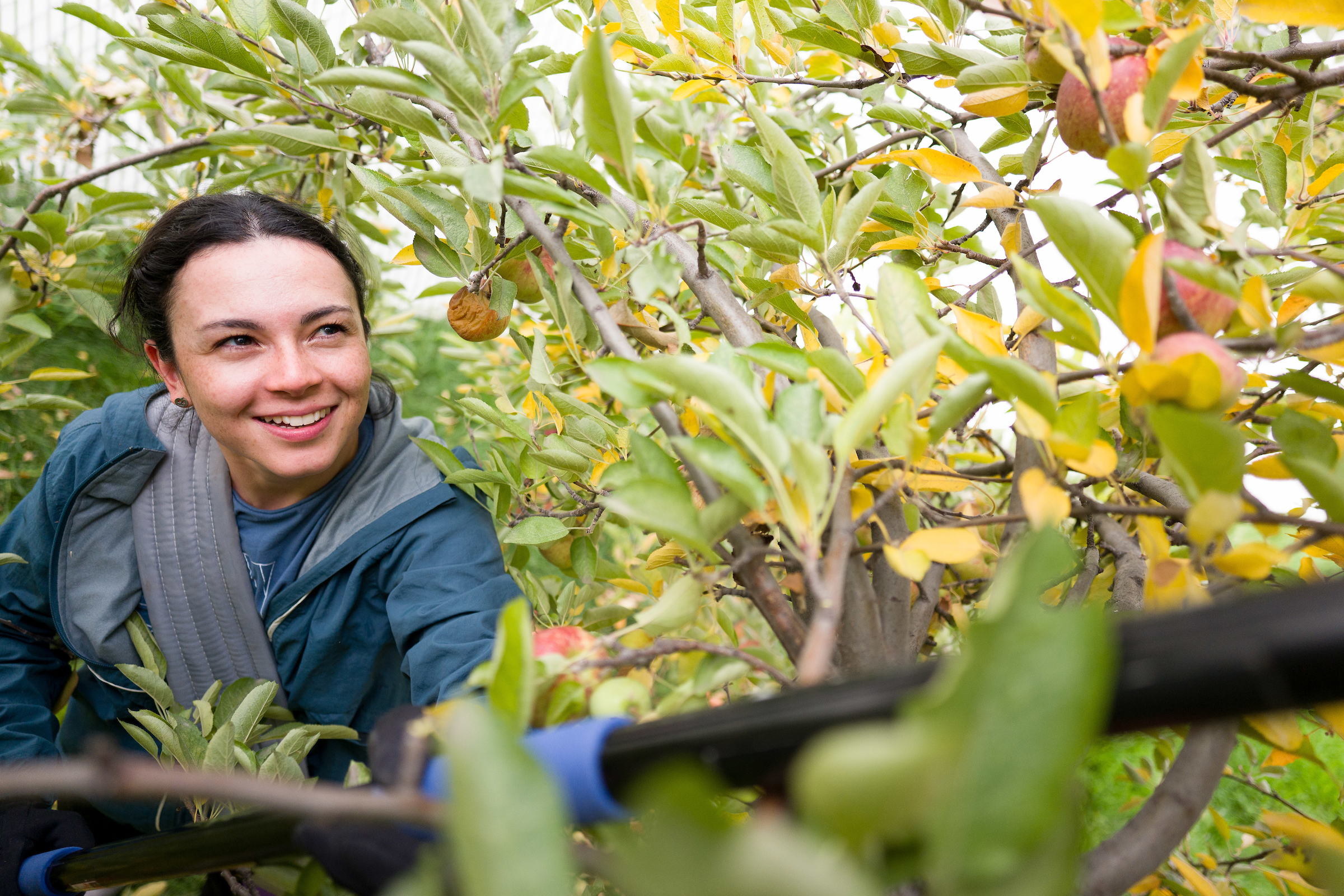
AS THE SUN'S RAYS START to peak over the mountains, Hillary White, a graduate student in USU's Department of Wildland Resources, leaves her remote camp and begins the hike toward the day's research site. She carries a pair of binoculars, a GPS Unit, a laser range finder and a note pad in her backpack. Throughout the morning, White hikes to 10 marked locations along a stretch of approximately three miles of riparian habitat. She is documenting the number of bird species as well as their abundance along Utah's rivers. Tuning out the roar of the river, White pulls the necessary tools at the first location and begins counting and classifying each bird she hears or sees within 30 meters. She uses the GPS unit to record exact locations. Throughout the field season, White may detect over 200 species of birds.
Searching for birds is often a “race against the heat of the day,” says White; it gets hotter and hotter — sometimes reaching 100 degrees before 9 a.m. Once the heat reaches this level, the birds stop singing, fly to cooler perches, and data collecting is over for the day. After putting her tools away, White cools off by jumping in the river. “I just love to dunk myself in snowmelt waterıit's the most energizing thing you can do after you've done your surveys.”
The riparian project consists of more than 37 sites in Utah and represents all five geographic regions of the state. Each site is analyzed three times a year; data collection occurs during the height of bird breeding season, May through June. After June, the birds are less visible. “Once birds are nesting, they are quiet and hard to find,” says White. “You might have a bird on a nest right above you but you won't know it.”
White is one of the many students currently benefiting from the U.S. Geological Survey Utah Fish and Wildlife Cooperative Research Unit (Utah Coop Unit) at USU. For over 70 years, USU students have been the beneficiaries of the Utah Coop Unit Agreement. Each of the cooperators contributes funds or in–kind services to the education of future wildlife managers. The signers of the agreement include the Utah Division of Wildlife Resources (UDWR), the U.S. Geological Survey (USGS), and Utah State University. The Wildlife Management Institute and the U.S. Fish and Wildlife Service also participate. Their purpose has remained constant since 1935: to synergize their resources for training wildlife and fish biologists and produce useable research data for wildlife management.
The state cooperator, UDWR, provides White with research funding and education assistance. Because of this assistance, White is able to return to school and earn her master's degree. “I like to think of this program as grooming the next generation of leaders,” White says. USU and USGS, the other cooperators, supply in–kind assistance for students like White. USU provides the infrastructure for research and waives indirect costs on UDWR projects . The federal cooperator, USGS, provides three scientists who advise USU students.
The Utah Coop Unit's origins trace back to the early 1930s, when the cartoonist J.N. “Ding” Darling was crafting political cartoons and satires which led him to be known as “the thorn in President Franklin Roosevelt's side.” His cartoons depict the wildlife predicament the United States was facing. One cartoon, entitled “What Changes One Generation Can Make,” consisted of two frames. The first shows a lone hunter hiding in the long grass beside a pond as hundreds of ducks fly overhead. The second frame shows hundreds of hunters in the long grass shooting at one lone duck flying overhead. This cartoon and others cut to the core of public consciousness during the 1920s and 30s — when the nation's wildlife resources were in great peril.. In the midst of his cartooning career, Darling decides to take more aggressive action when he reads the report compiled by Aldo Leopold and 14 other prominent conservationists in 1930. Their report boldly states that “wildlife demand was stripping supply,” and then declares the need to educate personnel to solve the wildlife conservation problems and to conduct research for wildlife management.
Darling's desire to respond to the report's findings motivates him to invest $3,000 of personal funds to assist in forming the first Fish and Wildlife Cooperative Unit located in Iowa in 1932 — the predecessor of today's Coop Units. An agreement is set up between the Iowa land–grant university and the state game agency.
The ongoing perseverance of Darling leads him to become the first chairperson of the Iowa Fish and Game Commission; and, a few years later, the recipient of a telephone call from President Roosevelt asking him to be the director of the agency known today as the U.S. Fish and Wildlife Service. It's this position that gives Darling the leverage he needs to create Coop Units at Utah State and other land–grant universities across the nation. He lobbies Congress and meets with executive officers from Hercules, DuPont, and Remington Arms companies to show that providing funding is in their best interest. By 1935 Darling had gathered enough funds to create nine federal Coop Units: Utah's Coop Unit was chosen to represent the Intermountain Region, covering typical problems of Utah, Nevada, southern Idaho and western Wyoming. Today, 38 of the nation's land–grant universities house Coop Units. Congress created the program in 1935 and it has been in place ever since.
White not only has the resource of an in–house federal advisor at USU, but she also has daily access to Dr. Frank Howe. He is a scientist from UDWR who has an office in the College of Natural Resources and acts as liaison for universities in Utah. His main function is to provide a link between students and UDWR to arrange internships and recruit new personnel. “He is a fantastic asset,” says Johan du Toit, department head of USU's Wildland Resources Department. Because of the constant interactions with UDWR's liaison, the college has been able to design its training programs to meet the needs of the UDWR. Alan Clark, assistant director at UDWR says, “Professors and students no longer need to call me in Salt Lake; they can now walk down the hall and talk to Frank Howe.”
White's thesis is an outgrowth of a UDWR project initiated by Howe in 1992. A quote from White's proposal summarizes the project: “Riparian habitat is the single most important habitat for birds in Utah. However, at least 80 percent of Utah's riparian habitat has been lost or altered since settlement and it is now less than 1 percent of Utah's land cover.”
Although she has been on the project for just a few years, her research provides an important insight into the areas of abundance, trends and richness of bird species found in Utah.
White's project will “create a bird–habitat association model, the results of which will become the basis for development of guidelines for riparian restoration and conservation in Utah.” Providing sound scientific research to help agencies make conservation decisions is at the heart of the Coop Unit's purpose. White's findings will build a framework for what types of restoration can be developed in riparian areas across the state. She is helping to author the 15–year UDWR report currently being compiled for the riparian project. Although she has been on the project for just a few years, her research provides an important insight into the areas of abundance, trends and richness of bird species found in Utah. “My thesis will include what was stated in this 15–year report but also include several more years of data and habitat information,” she says.
UDWR has more than 20 contracts at USU which total nearly $3 million dollars. Each of these Coop Unit projects provides funding to train undergraduate and graduate students to become the future guardians of our natural resources.
Dr. John Bissonette, White's major professor and leader of the Coop Unit, is a federal scientist placed at USU to assist in advising and teaching graduate students and to lead research projects. USGS has also placed two additional federal scientists in the college: Dr. Phaedra Budy and Dr. Thomas Edwards. The Dean of the College of Natural Resources, Dr. Nat Frazer says of these scientists, “we have three Ph.D. research faculty whose salaries we don't payıthey are outstanding researchers, so we are very, very fortunate to have them.”
Bissonette says a major benefit of the Coop Unit is the Research Work Orders (RWO) process. The agreement makes it possible for federal agencies to have full access to the expertise of the university. Federal agencies can communicate directly with USU scientists about their needs, and together they can write the project objectives and budget. Currently there are four open RWOs at USU, totaling $478,000. This number has the potential of being much higher. Any principal investigator at USU can work through an RWO if they are collaborating with a federal agency on a natural resource research project with graduate student involvement.
“The Coop Unit is “a very cost effective mechanism,” says Dr. Jim Fleming, deputy chief of the USGS Coop Units from 1995–2007. Each cooperator brings something to the table and walks away with much more. USGS provides three Ph.D. level scientists and the mechanism to bring federal and university scientists together; the state agency provides research funds and agency liaisons; and the university greatly reduces overhead by providing a staff assistant and the infrastructure to function. All three agencies come away with an ongoing source of graduates to fill positions of their agencies, as well as new research findings to help their scientists manage the nation's natural resources and improve their programs. “It's a win, win, win situation,” says Frazer.
As Hillary White completes her education at USU, she'll be filling the position of full–time UDWR scientist. New students will take her place and reap the financial and educational benefits through the Coop Unit. The training of future wildlife managers is an ongoing mandate for these units, which stimulate practical training as they assist in guiding students through the research and education process. Trained to protect our renewable but increasingly limited resources, these students are our nation's future wildlife managers.
—Shauna Leavitt '06
Photo Gallery
Mouse over thumbnail for detail

Documenting Utah's bird species, like this great blue heron, is part of graduate student Hillary White's work
through the Utah Coop Unit.
Photo by Jared Thayne

USU graduate student Hillary White searches ripaian areas throught Utah, logging number of bird species and
their abundance. The experience prepares White and others to become the wildlife managers of tomorrow.